
Medical Disclaimer
This article provides general educational information about knee injuries after car accidents. It is not medical advice. If you're experiencing knee pain, swelling, or instability after a crash, please seek evaluation from a qualified healthcare provider.
Your knee slammed into the dashboard. Now it's swollen, stiff, and painful to walk on. Or maybe you felt fine right after the crash—but two days later, your knee started aching and giving way. Knee injuries are among the most common results of car accidents, and they range from minor bruises to ligament tears that require surgery. This guide explains the types of knee injuries that happen in crashes, how they're diagnosed, what treatment looks like, and how Oregon PIP helps cover your care.
How Car Accidents Injure Your Knees
Your knees are especially vulnerable during a car accident because of where they sit in the vehicle—directly behind the dashboard with little protection. During a collision, your knees can be injured in several ways:
- Dashboard impact – In a front-end or rear-end collision, your knees slam forward into the dashboard, concentrating force directly on the kneecap and the ligaments behind it
- Bracing for impact – When you see a crash coming, you instinctively brace your legs against the floorboard, putting enormous stress on your knee joints
- Twisting forces – Your body may rotate during impact while your feet stay planted, twisting the knee beyond its natural range
- Side impact – A T-bone collision can push the door into your knee from the side, damaging the ligaments on the inner or outer part of the joint
- Pedal contact – Drivers often have a foot on the brake at impact, transferring collision force up through the leg and into the knee
According to the American Academy of Orthopaedic Surgeons, knee injuries account for a significant percentage of all car accident injuries, with the knee's complex structure of bones, ligaments, cartilage, and tendons making it vulnerable to multiple types of damage simultaneously.
Common Types of Knee Injuries from Car Accidents
Dashboard Knee (PCL Tear)
The most signature knee injury from car accidents. When your knee strikes the dashboard, the force pushes the shinbone backward, tearing the posterior cruciate ligament (PCL). This accounts for roughly 20% of all knee ligament injuries from crashes.
Symptoms include:
- Pain and swelling at the back of the knee
- Knee feels unstable, especially going downstairs
- Difficulty walking or bearing weight
- Stiffness that worsens over the first few days
ACL Tears
The anterior cruciate ligament (ACL) stabilizes your knee during rotation and forward movement. It can tear during a car accident when the knee hyperextends, twists violently, or absorbs a direct blow.
Symptoms include:
- A loud "pop" at the moment of injury
- Rapid swelling within hours
- Severe pain and inability to continue walking
- Feeling that the knee "gives out" or buckles
- Loss of full range of motion
MCL and LCL Tears
The medial collateral ligament (MCL) runs along the inner knee, while the lateral collateral ligament (LCL) runs along the outer knee. Side-impact collisions frequently damage these ligaments when force pushes the knee sideways.
Symptoms include:
- Pain along the inner or outer edge of the knee
- Swelling and tenderness at the injury site
- Knee feels loose or unstable when walking
- Pain when pushing on the affected side of the knee
Meniscus Tears
The meniscus is C-shaped cartilage that cushions and stabilizes the knee joint. Twisting forces during a car accident can tear this cartilage, causing pain and mechanical problems in the joint.
Symptoms include:
- Pain that worsens with twisting or squatting
- Clicking, popping, or catching sensation in the knee
- Knee "locking up" and unable to fully straighten
- Swelling that develops gradually over 24-48 hours
- Feeling of the knee catching or giving way
Patellar (Kneecap) Fractures
A direct hit to the dashboard can crack or shatter the kneecap. The patella is a small, flat bone that protects the front of the knee joint, and it's exposed to the full force of a dashboard impact.
Symptoms include:
- Intense pain at the front of the knee
- Inability to straighten the leg or lift it
- Visible deformity or a gap you can feel in the kneecap
- Significant swelling and bruising
- Pain that worsens with any knee movement
Tibial Plateau Fractures
The tibial plateau is the flat top of the shinbone that forms the base of the knee joint. High-energy crashes can fracture this area, which is a serious injury because it affects the joint surface.
Symptoms include:
- Severe pain and inability to bear weight
- Knee swelling that develops rapidly
- Visible deformity of the lower leg
- Numbness or tingling in the foot (if nerves are affected)
Knee Dislocations
A knee dislocation occurs when the bones of the knee are completely forced out of alignment. This is rare but extremely serious—it can damage blood vessels and nerves, potentially threatening the limb.
Symptoms include:
- Obvious deformity of the knee
- Severe pain and complete inability to move the knee
- Numbness or coldness in the lower leg or foot
- Rapid, significant swelling
Seek Emergency Care Immediately
Call 911 or go to the emergency room if you experience any of the following after a car accident:
- Visible deformity of the knee or lower leg
- Inability to bear any weight on the leg
- Numbness, coldness, or pale/blue color in your foot
- Severe pain that isn't manageable
- A locked knee that won't bend or straighten
- Rapid, severe swelling within minutes of the accident
Why Knee Pain Is Often Delayed After a Car Accident
Many people walk away from a car accident thinking their knees are fine—only to wake up two or three days later with significant pain and swelling. This is normal, and here's why:
- Adrenaline response – Your body floods with stress hormones during a crash, masking pain signals for hours or even days
- Gradual swelling – Inflammation from ligament tears and cartilage damage builds slowly, with swelling peaking 48-72 hours after injury
- Micro-tears worsen – Small tears in ligaments or cartilage can enlarge with continued use before you realize you're injured
- Compensating patterns – You may not notice knee instability until you try specific movements like climbing stairs, squatting, or pivoting
This is exactly why medical professionals recommend getting checked within 72 hours of an accident, even if you feel okay. For more guidance, see our article on when to seek medical care after a crash.
How Knee Injuries Are Diagnosed
Your healthcare provider will use a combination of physical examination and imaging to diagnose your knee injury:
Physical Examination
Your doctor will test your knee's stability, range of motion, and strength. Specific tests like the Lachman test (ACL), posterior drawer test (PCL), and McMurray test (meniscus) help identify which structures are damaged.
Imaging Studies
| Imaging Type | What It Shows | Best For |
|---|---|---|
| X-ray | Bones and joint alignment | Fractures, dislocations |
| MRI | Soft tissue detail (ligaments, cartilage, tendons) | Ligament tears, meniscus damage |
| CT Scan | Detailed cross-sections of bone | Complex fractures, surgical planning |
| Ultrasound | Soft tissue, fluid, and real-time movement | Tendon injuries, fluid buildup |
An X-ray alone won't show ligament or cartilage injuries. If your knee pain persists and X-rays are normal, ask your provider about an MRI—it's the gold standard for diagnosing soft tissue knee injuries.
Treatment Options for Knee Injuries
Conservative (Non-Surgical) Treatment
Many knee injuries heal without surgery, especially with early intervention:
- RICE protocol – Rest, Ice, Compression, and Elevation in the first 48-72 hours to control swelling
- Physical therapy – Targeted exercises to strengthen the muscles around the knee, restore range of motion, and improve stability
- Chiropractic care – Alignment of the knee, hip, and spine to ensure proper biomechanics during healing
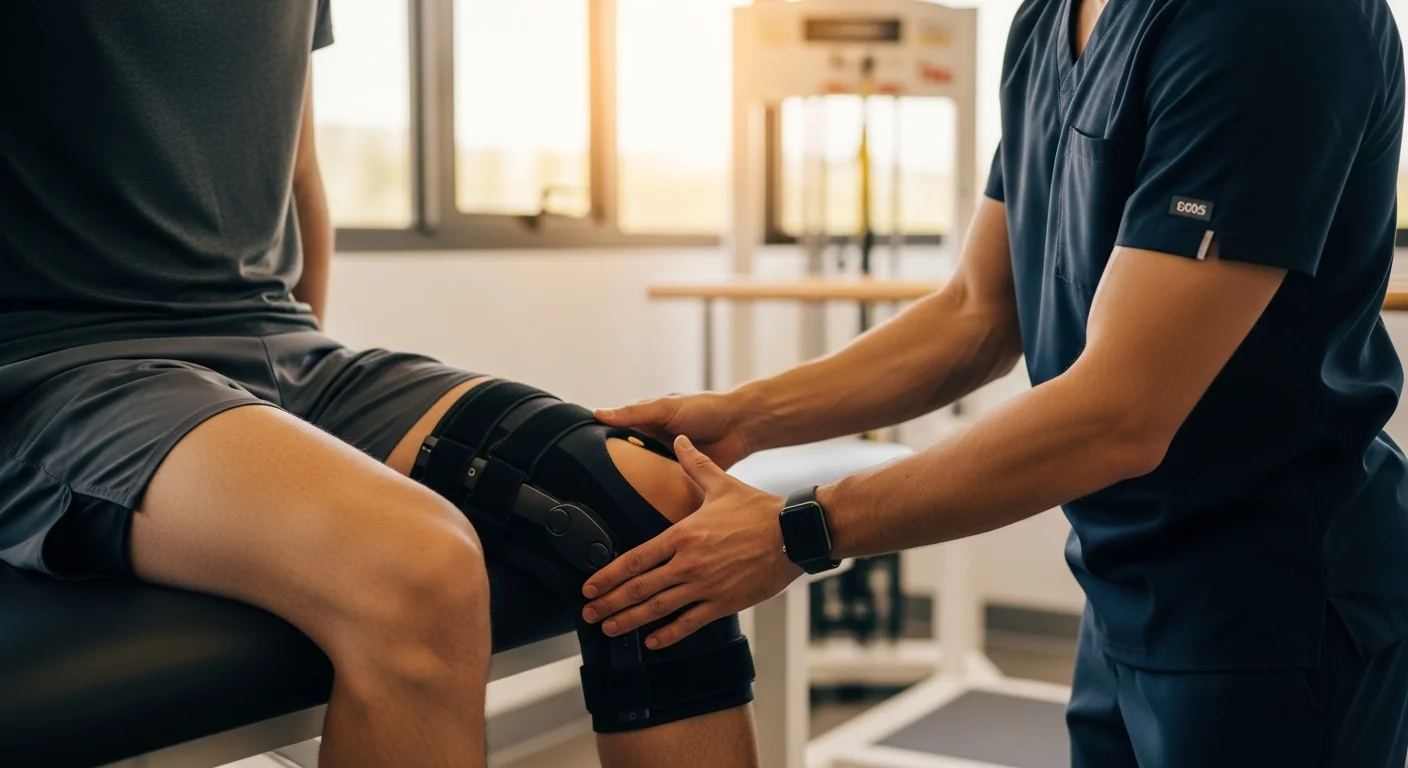
- Knee bracing – Supportive braces to stabilize the joint and prevent further injury during recovery
- Anti-inflammatory medications – NSAIDs to manage pain and reduce inflammation
- Corticosteroid injections – Targeted injections to reduce severe inflammation and pain
- Massage therapy – Reduces muscle tension and improves circulation around the injured knee
Surgical Treatment
Surgery may be necessary for severe injuries:
- Arthroscopic surgery – Minimally invasive procedure using small cameras and instruments to repair torn meniscus or remove loose cartilage
- ACL/PCL reconstruction – Replacing the torn ligament with a tissue graft, typically followed by 6-9 months of rehabilitation
- Fracture fixation – Using screws, plates, or pins to stabilize broken bones in the kneecap or tibial plateau
- Meniscus repair or removal – Stitching a torn meniscus back together or removing the damaged portion
- Knee replacement – In cases of severe joint destruction, partial or total knee replacement may be needed (about 90% of replacements last 15+ years)
Recovery Timeline for Knee Injuries
Recovery times vary significantly based on the type and severity of injury:
| Injury Type | Typical Recovery Time | Notes |
|---|---|---|
| Minor sprains/contusions | 2-4 weeks | RICE and rest usually sufficient |
| MCL/LCL tear (Grade 1-2) | 4-8 weeks | Bracing and physical therapy |
| Meniscus tear (non-surgical) | 4-8 weeks | Physical therapy and activity modification |
| Meniscus tear (surgical repair) | 3-6 months | Limited weight-bearing initially |
| Patellar fracture | 6-12 weeks | May need surgery if displaced |
| ACL reconstruction | 6-9 months | Full rehab may take up to 1 year |
| PCL reconstruction | 6-12 months | Often longer rehab than ACL |
| Tibial plateau fracture | 3-6 months | Weight-bearing restrictions for weeks |
| Knee dislocation | 6-12+ months | Multiple surgeries may be needed |
Factors that affect your recovery: Your age, overall health, whether you smoke, how quickly you start treatment, and how consistently you follow your rehabilitation program all play a role in how fast you heal.
What Happens If Knee Injuries Go Untreated
Ignoring knee pain after a car accident can lead to serious long-term consequences:
- Post-traumatic arthritis – Damaged cartilage deteriorates over time, leading to chronic joint pain and stiffness
- Chronic instability – An untreated ligament tear leaves the knee permanently unstable, increasing your risk of future injuries
- Secondary injuries – Limping or favoring your injured knee puts extra stress on your hip, back, and opposite knee, often causing new pain
- Muscle atrophy – Avoiding use of the injured leg causes the surrounding muscles to weaken, making recovery harder over time
- Permanent mobility limitations – Scar tissue and joint damage can permanently restrict your range of motion
The message is clear: even if your knee pain seems manageable, get it evaluated. Early treatment almost always leads to better outcomes. Read more about common mistakes people make after a car accident, including waiting too long to seek care.
Oregon PIP Coverage for Knee Injuries
Oregon's Personal Injury Protection (PIP) insurance covers knee injury treatment regardless of who caused the accident. Here's what you need to know:
- No-fault coverage – PIP pays for your treatment whether you caused the accident or not
- Coverage includes – Doctor visits, X-rays, MRI scans, physical therapy, chiropractic care, surgery, knee braces, and rehabilitation
- Minimum coverage – Oregon law requires at least $15,000 in PIP medical coverage per person
- No deductible on most policies – Treatment often starts with zero out-of-pocket cost
- Time limits apply – You must seek initial treatment within a reasonable time after the accident to qualify
For a complete breakdown of how Oregon PIP works, see our Oregon PIP Explained in Plain English guide.
Insurance Tip
File your PIP claim as soon as possible after the accident. Delays in filing—or gaps in your treatment—can give insurance companies a reason to question whether your knee injury is truly related to the crash. For more on navigating the insurance process, read Dealing with the Other Driver's Insurance Company.
Frequently Asked Questions
Why does my knee hurt days after a car accident?
Delayed knee pain is very common after car accidents. Adrenaline and stress hormones mask pain during and immediately after the crash. As inflammation builds over 24-72 hours, swelling increases and compressed nerves begin sending pain signals. Ligament tears and meniscus damage may not become apparent until you try specific movements. Always get evaluated, even if pain appears days later.
What is "dashboard knee"?
Dashboard knee is the common name for a PCL (posterior cruciate ligament) tear caused when your knee strikes the dashboard during a collision. The impact pushes the shinbone backward, stretching or tearing the PCL. It's one of the most common knee injuries in car accidents, particularly in front-end and rear-end collisions. Symptoms include pain behind the knee, swelling, and instability—especially when going downstairs.
Can I walk on a torn knee ligament?
In some cases, yes—but it's not recommended without medical evaluation. Some people can walk on a partial ACL or MCL tear, though with pain and instability. However, walking on a torn ligament risks making the tear worse, damaging cartilage, or injuring other structures in the knee. If your knee feels unstable or gives way, use crutches and see a provider as soon as possible.
How long does knee injury recovery take after a car accident?
Recovery varies widely depending on the injury. Minor sprains may heal in 2-4 weeks. Meniscus tears typically take 4-8 weeks without surgery. Ligament reconstructions (ACL, PCL) require 6-12 months of rehabilitation. Factors like your age, overall health, treatment consistency, and injury severity all influence recovery time. Your provider can give you a more specific timeline based on your diagnosis.
Do I need surgery for a knee injury from a car accident?
Not always. Many knee injuries—including partial ligament tears, mild meniscus tears, and sprains—heal with physical therapy, bracing, and rest. Surgery is typically recommended for complete ACL/PCL tears in active individuals, displaced kneecap fractures, large or complex meniscus tears, and knee dislocations. Your orthopedic provider will discuss whether surgery or conservative treatment is the best approach for your specific injury.
Does Oregon PIP cover knee surgery and physical therapy?
Yes. Oregon PIP covers medically necessary treatment for car accident injuries, including knee surgery, physical therapy, chiropractic care, MRI scans, X-rays, knee braces, and post-surgical rehabilitation. The minimum coverage is $15,000, though many policies offer higher limits. PIP is no-fault coverage, meaning it pays regardless of who caused the accident.
Related Injuries
Knee injuries often occur alongside other car accident injuries:
- Back pain – Compensating for a knee injury often strains the lower back
- Soft tissue injuries – Ligament and meniscus tears are soft tissue injuries
- Nerve damage – Knee dislocations and fractures can compress or damage nearby nerves
- Whiplash – The same crash forces that injure knees often cause neck injuries
- Shoulder injuries – Multiple extremity injuries are common in high-impact crashes
- Emotional recovery – Mobility limitations from knee injuries can significantly impact mental health
Key Takeaways
- Knee injuries are among the most common car accident injuries, especially "dashboard knee" (PCL tears)
- Knee pain is frequently delayed 24-72 hours after a crash due to adrenaline and gradual inflammation
- An X-ray alone won't detect ligament or cartilage damage—ask about MRI if pain persists
- Many knee injuries heal with physical therapy and bracing; surgery isn't always needed
- Untreated knee injuries can lead to chronic pain, arthritis, and secondary injuries in the hip and back
- Oregon PIP covers knee injury diagnosis and treatment, including surgery and rehabilitation
- Early treatment and consistent rehabilitation are the keys to the best possible recovery
Next Steps
If you're experiencing knee pain after a car accident:
- See a healthcare provider within 72 hours—even if pain seems minor
- Describe exactly how the injury happened (dashboard impact, twisting, bracing) to help with diagnosis
- Ask about MRI if X-rays are normal but pain persists
- File a PIP claim with your own insurance company right away
- Follow your treatment plan consistently—gaps in care can hurt both your recovery and your claim
- Document your symptoms daily, including what activities are difficult or impossible
Need help finding a provider? Browse our Oregon Provider Directory to connect with chiropractors, physical therapists, and orthopedic specialists experienced in treating auto accident knee injuries.