
Medical Disclaimer
This article provides general educational information about shoulder injuries after car accidents. It is not medical advice. If you're experiencing shoulder pain after a crash, please seek evaluation from a qualified healthcare provider.
Shoulder injuries are among the most common—and often most debilitating—injuries from car accidents. Whether from bracing against the steering wheel, the force of a seatbelt, or direct impact, shoulder damage can significantly limit your daily activities. Understanding the types of injuries, symptoms to watch for, and treatment options can help you navigate your recovery.
How Car Accidents Cause Shoulder Injuries
Your shoulder is a complex joint with remarkable mobility, but that same flexibility makes it vulnerable to injury during a crash. Common causes include:
- Bracing for impact – Gripping the steering wheel tightly before a collision can strain muscles and tendons
- Seatbelt force – The restraint can dig into your shoulder during sudden stops
- Direct impact – Hitting the door, window, or dashboard
- Airbag deployment – The force of an airbag can cause shoulder trauma
- Being thrown or jolted – Sudden movement can dislocate or strain the joint
Common Types of Shoulder Injuries
Rotator Cuff Tears
The rotator cuff is a group of four muscles and tendons that stabilize your shoulder. Tears can be partial or complete.
Symptoms include:
- Pain when lifting or rotating your arm
- Weakness when raising your arm
- Crackling sensation when moving the shoulder
- Pain that worsens at night, especially when lying on the affected side
- Difficulty reaching behind your back
Shoulder Dislocation
A dislocation occurs when the upper arm bone pops out of the shoulder socket. This is often immediately apparent and extremely painful.
Symptoms include:
- Intense pain
- Visible deformity (shoulder looks out of place)
- Inability to move the arm
- Swelling and bruising
- Numbness or tingling down the arm
Shoulder Fractures
Fractures can occur in the collarbone (clavicle), upper arm bone (humerus), or shoulder blade (scapula).
Symptoms include:
- Severe pain that worsens with movement
- Swelling and bruising
- A bump or deformity at the fracture site
- Inability to lift the arm
- Grinding sensation with movement
Labral Tears (SLAP Tears)
The labrum is a ring of cartilage that surrounds the shoulder socket. Tears can result from trauma or repetitive stress.
Symptoms include:
- Deep, aching pain in the shoulder
- Catching or locking sensation
- Decreased range of motion
- Feeling of instability
- Pain with overhead activities
Soft Tissue Injuries (Strains and Sprains)
Damage to muscles, tendons, or ligaments in the shoulder area.
Symptoms include:
- Pain and tenderness
- Swelling
- Stiffness and reduced mobility
- Muscle spasms
- Bruising
Emergency Warning Signs
Seek immediate medical care if you experience:
- Visible deformity of the shoulder
- Inability to move your arm at all
- Severe pain that doesn't improve with rest
- Numbness or tingling in your arm or hand
- Signs of poor circulation (pale, cold, or blue arm/hand)
- Bone protruding through the skin
These symptoms may indicate a serious injury requiring emergency treatment.
Why Shoulder Pain Can Be Delayed
Like many car accident injuries, shoulder pain may not appear until hours or days after the crash. Reasons include:
- Adrenaline – Masks pain immediately after the accident
- Inflammation builds gradually – Swelling develops over 24-72 hours
- Soft tissue damage worsens – Small tears can become larger with continued use
- Focus on other injuries – More severe injuries may distract from shoulder symptoms
This is why medical evaluation is important even if you feel okay initially. Learn more: When to Seek Medical Care After a Crash
How Long Does Recovery Take?
Recovery time varies significantly based on the type and severity of injury:
| Injury Type | Typical Recovery Time |
|---|---|
| Soft tissue strains/sprains | 2-6 weeks |
| Shoulder dislocation | 3-4 months (longer if surgery needed) |
| Rotator cuff tear (minor) | 4-6 months with physical therapy |
| Rotator cuff tear (surgical repair) | 6-12 months |
| Clavicle fracture | 6-12 weeks |
| Labral tear (surgical repair) | 4-6 months |
Diagnosis: What to Expect
When you see a healthcare provider for shoulder pain after an accident, they'll typically:
- Take your history – Details about the accident and your symptoms
- Physical examination – Testing range of motion, strength, and stability
- X-rays – To check for fractures and dislocations
- MRI – To evaluate soft tissue damage (rotator cuff, labrum, ligaments)
- CT scan – For complex fractures or detailed bone imaging
Treatment Options
Conservative Treatment
- Rest and activity modification – Avoiding movements that worsen pain
- Ice and heat therapy – Ice for acute inflammation, heat for muscle tension
- Over-the-counter pain relievers – NSAIDs like ibuprofen (as directed by your doctor)
- Sling or immobilization – For fractures or dislocations
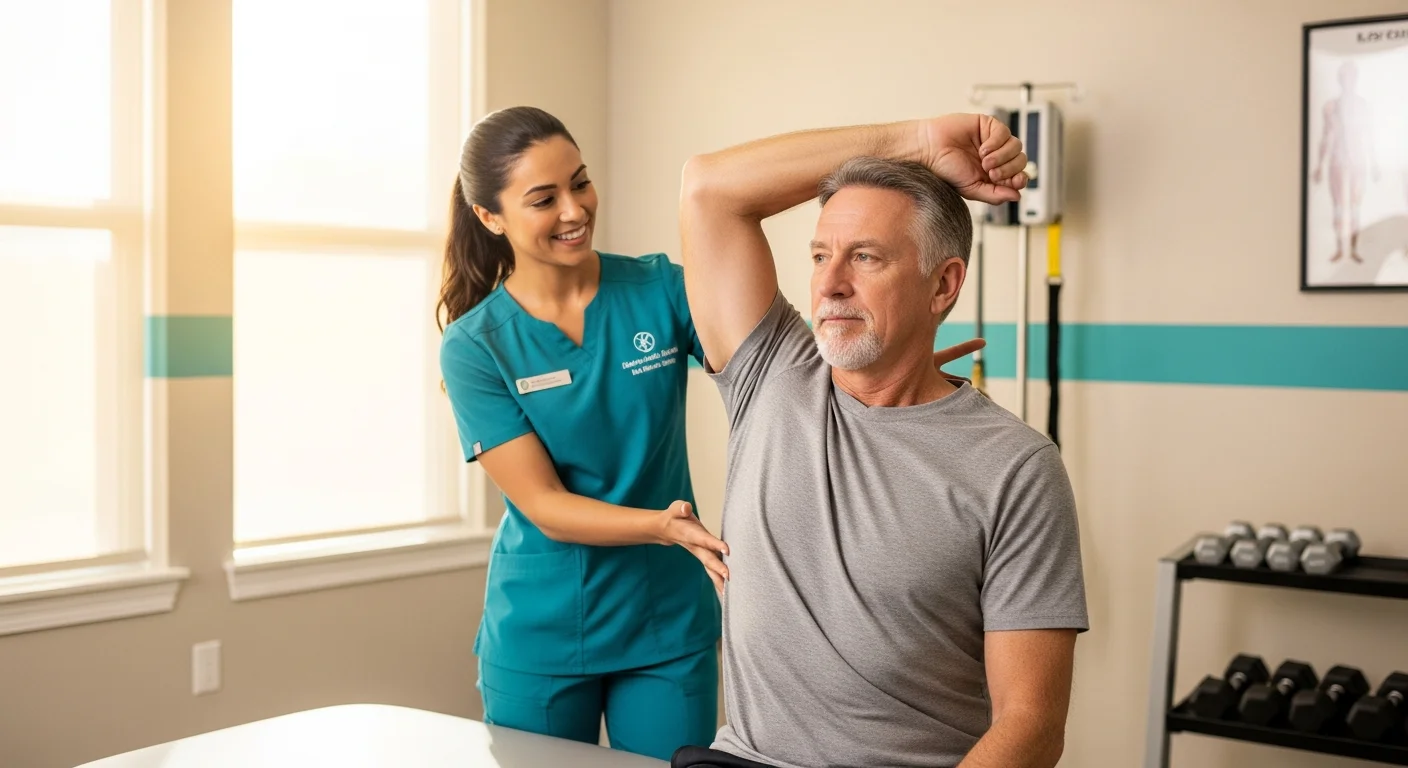
Physical Therapy
Physical therapy is essential for most shoulder injuries and includes:
- Range of motion exercises
- Strengthening exercises for rotator cuff and supporting muscles
- Manual therapy and massage
- Posture correction
- Education on preventing re-injury
Find a provider: Oregon Provider Directory
Chiropractic Care
Chiropractors can help with:
- Joint mobilization
- Soft tissue therapy
- Addressing related neck and upper back issues
- Rehabilitation exercises
Injections
- Corticosteroid injections – Reduce inflammation and pain
- Platelet-rich plasma (PRP) – May promote healing in some injuries
- Hyaluronic acid – For joint lubrication
Surgery
Surgery may be recommended for:
- Complete rotator cuff tears
- Severe dislocations with ligament damage
- Complex fractures
- Labral tears that don't respond to conservative treatment
How Oregon PIP Covers Shoulder Injury Treatment
Oregon's Personal Injury Protection (PIP) insurance covers medical expenses for shoulder injuries from car accidents:
- Minimum coverage: $15,000 in medical expenses
- Covered treatments: Doctor visits, imaging (X-ray, MRI), physical therapy, chiropractic care, surgery, medications
- No-fault coverage: Available regardless of who caused the accident
- Important: Seek treatment promptly and follow your provider's recommendations
Learn more: Oregon PIP Insurance Guide
Document Your Injury
Keep records of:
- Pain levels (1-10 scale) and when they occur
- Activities you can no longer do
- All medical appointments and treatments
- How the injury affects work and daily life
- Photos of visible bruising or swelling
This documentation supports your PIP claim and helps track your recovery progress.
Frequently Asked Questions
Can a seatbelt cause shoulder injuries?
Yes. While seatbelts save lives, the force of sudden deceleration can cause shoulder strains, bruising, and in some cases, clavicle fractures or soft tissue damage. This is sometimes called "seatbelt syndrome."
How do I know if I tore my rotator cuff?
Common signs include pain when lifting or rotating your arm, weakness in the shoulder, difficulty sleeping on that side, and a crackling sensation during movement. An MRI is typically needed for definitive diagnosis.
Will I need surgery for my shoulder injury?
Not always. Many shoulder injuries heal with conservative treatment including rest, physical therapy, and medication. Surgery is typically reserved for complete tears, severe dislocations, or injuries that don't improve with other treatments.
Can I still work with a shoulder injury?
It depends on your job and the severity of your injury. Desk jobs may be manageable, while physical labor may require time off or modified duties. Your doctor can provide work restrictions documentation.
Does Oregon PIP cover physical therapy for shoulder injuries?
Yes. Oregon PIP covers physical therapy when it's related to your car accident injury. Make sure your physical therapist documents that treatment is connected to the accident.
What if my shoulder pain appeared days after the accident?
Delayed symptoms are common with shoulder injuries. Adrenaline can mask pain, and inflammation builds over time. Seek medical evaluation even if symptoms appear days later—this is still considered accident-related and should be covered by PIP.
Related Injuries
Shoulder injuries often occur alongside other car accident injuries:
- Whiplash – Neck injuries from the same impact forces
- Back pain – Spinal injuries are common in crashes
- Headaches – Often accompany neck and shoulder trauma
- Concussions – Can occur in the same accident
- Chest & rib injuries – Seatbelt force affects both the shoulder and chest
Key Takeaways
- Shoulder injuries are common in car accidents due to bracing, seatbelt force, and impact
- Types range from soft tissue strains to rotator cuff tears and fractures
- Symptoms may be delayed—get evaluated even if you feel okay initially
- Most injuries improve with physical therapy and conservative treatment
- Surgery is only needed for severe cases
- Oregon PIP covers diagnosis and treatment costs
Next Steps
If you're experiencing shoulder pain after a car accident:
- See a healthcare provider for proper diagnosis
- Follow your treatment plan, especially physical therapy exercises
- File a PIP claim with your insurance company
- Document your symptoms and how they affect daily activities
- Be patient—shoulder injuries can take time to heal fully
Need help finding a provider? Browse our Oregon Provider Directory to connect with physical therapists, chiropractors, and other specialists who treat auto accident injuries.